
Latest News and Articles

Wellington Eye Centre Optometrist
Blue light is a bit of a buzzword these days, but is it evil or is it helpful?
Websites try to sell you blue light filtering spectacles, or encourage you to switch your screens to dark mode to reduce blue light, but some eye treatments intentionally use blue light to treat conditions. So, what are you to believe?
Let’s unpack some of the statements or ideas you might have read or heard about blue light.
What is blue light?
Blue light is a type of visible light, and visible light is a type of electromagnetic energy.
Electromagnetic energy travels in waves. Most wavelengths are invisible (think X-rays and radio waves). There is a small band of wavelengths that are visible to the human eye.
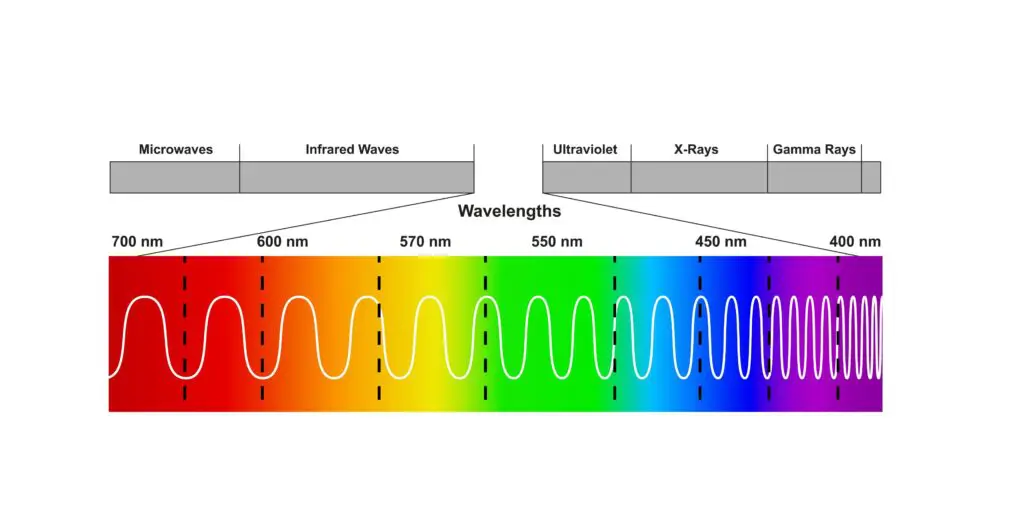
These visible wavelengths are called visible light and are electromagnetic waves with wavelengths from 380 to 700 nanometres. The shorter wavelengths in this range are blue-violet light, and the longer wavelengths are red light.
UV light, or Ultra-Violet light, is not Blue Light. UV light is invisible, and it is the light that causes sun damage, and at high enough levels, it can damage the tissues of your eyes.
Where can you find blue light?
Blue light is naturally found in sunlight. This is the greatest source of blue light there is. Artificial sources of blue light include devices such as computer screens, smartphones, tablets, television screens and LED/Fluorescent lighting.

What is blue light good for?
Blue light is like a super drug for humans! Exposure to blue light has been shown to boost our attention, increase our reaction times and improve our mood. All great attributes to have during the day when we want to be alert.
Blue light for the treatment of dry eye and blepharitis
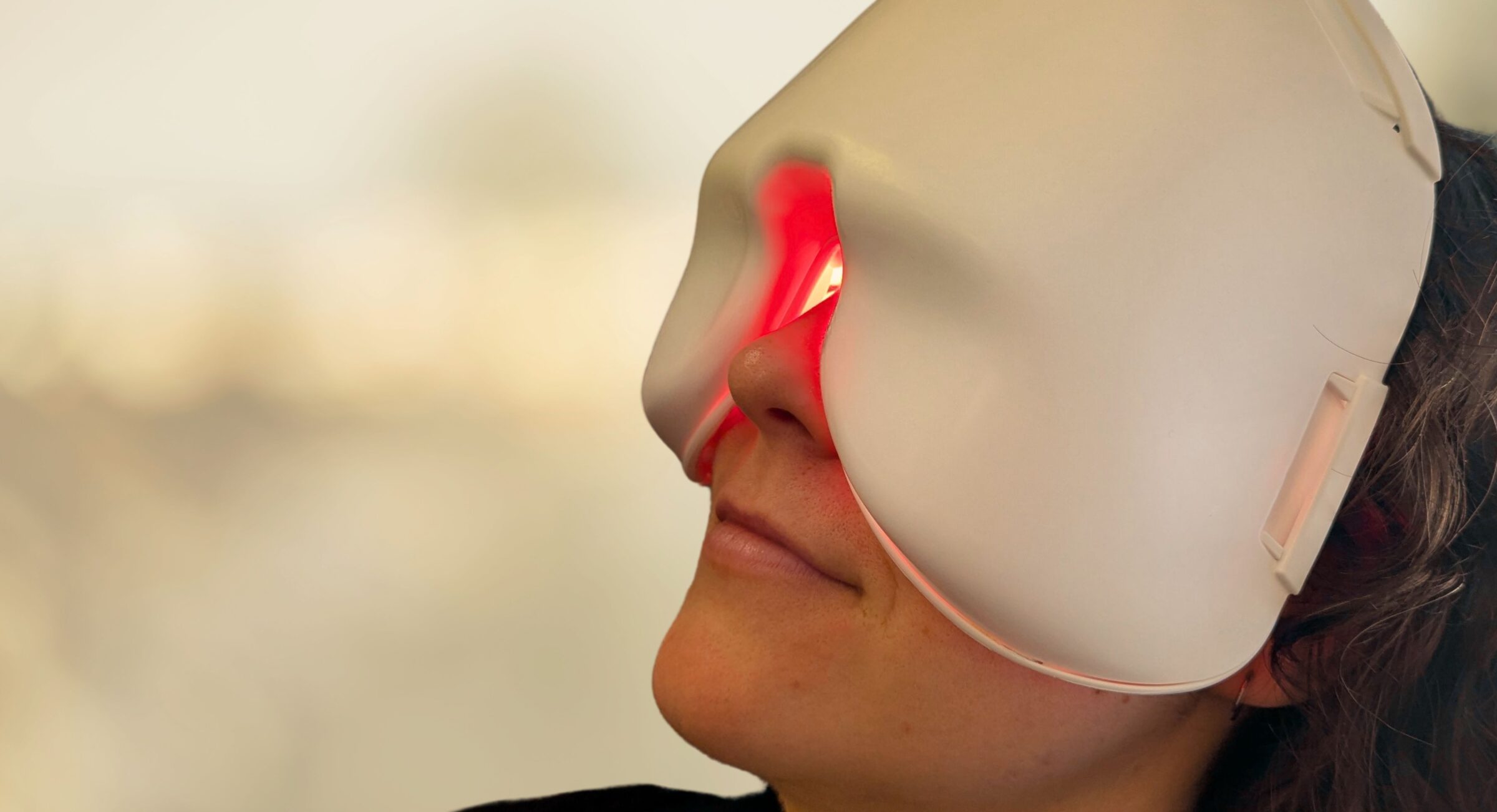
Low-Level Light Therapy (LLLT) is a non-invasive treatment that utilises specific wavelengths of light to stimulate healing processes in tissues. LLLT can be used in the area around the eyes to help treat eye conditions such as Dry Eye. LLLT can use different wavelengths of light to treat different conditions. Red light is especially useful for people whose dry eye is evaporative. Blue light LLLT is used when the Dry Eye has underlying causes such as Blepharitis, Demodex and/or Rosacea.
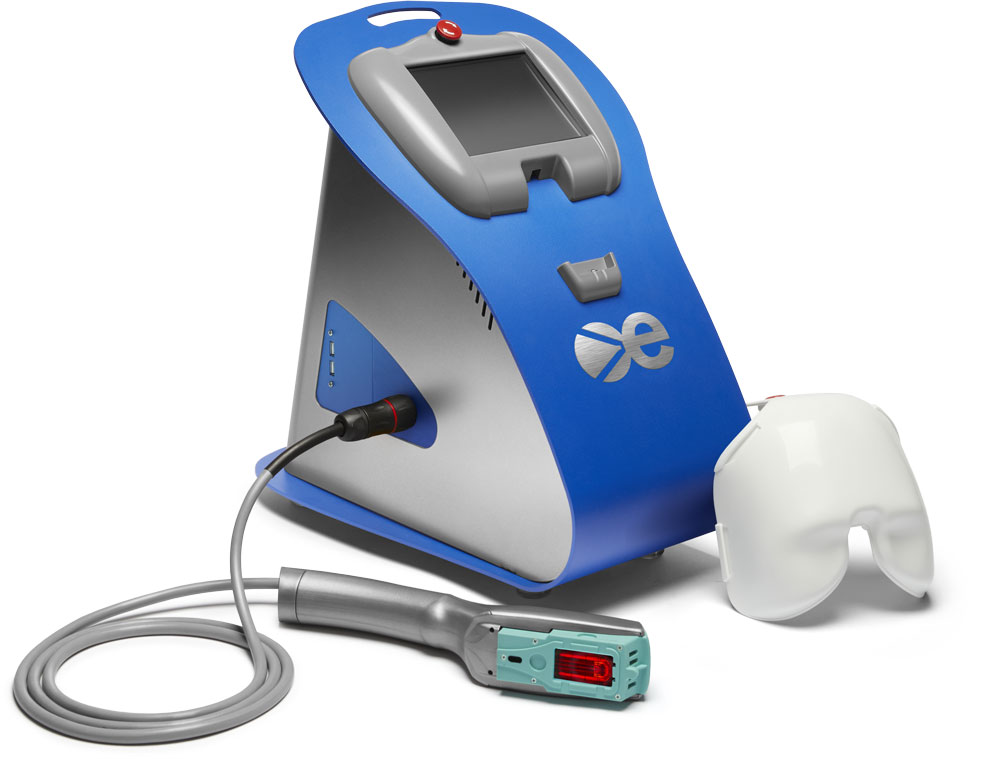
The Wellington Eye Centre has both Red and Blue LLLT options.
Red light LLLT works by penetrating the skin and tissues to a cellular level. The red wavelength stimulates the cells to increase ATP production in the mitochondria , which promotes blood flow, reduces inflammation, and supports cellular regeneration.
Blue light LLLT works by targeting and destroying porphyrin molecules found in the cell wall of bacteria. Effectively killing those bacteria that contribute to the conditions of Blepharitis, Rosacea and Demodex.
When is blue light less helpful?
Naturally, as the sun dims and the level of blue light drops, our eyes detect the change in blue light levels, and this creates a reaction that stimulates the body to release melatonin.
Melatonin is a neurohormone and is the chemical trigger to prepare us for sleep. So, if we expose ourselves to high levels of blue light in the evening (e.g. doom scrolling on our phones) this prevents or reduces the release of melatonin, making it harder to fall asleep.
Messing with your sleep disrupts your circadian cycle; you will feel tired, and your brain won’t work quite as fast or as sharply. But every other system in your body will also be affected, healing slows, mood drops, and you even get drier eyes!
Sleep is so important to the health of your eyes; we’ve written an entire blog just on that.
How to manage blue light exposure?
During your normal daytime hours, there is no need to avoid blue light from either the sun or from artificial sources like screens.
You still need to be aware of how much exposure you have to the sun, due to the UV light that is also associated with natural sunlight. So wear sun protection to protect your skin and eyes from general sun damage: hats, sunglasses, sunscreen. But you don’t have to worry specifically about daytime blue light exposure.
However, in the evening, before you go to sleep, there are many advantages to reducing your exposure to blue light. The best and simplest way is to avoid ALL screens for 2-3 hours before bedtime. But we know how hard that is, so here are some more manageable options;
- Set an alarm to encourage you to turn off all devices before bed. Start with 30 minutes before bed, then increase that time.
- Use dark mode or dim the brightness on any devices used for 3 hours before sleep
- Get back into books! Reading from the page, not from a device.
- Try to pick lighting options for your lounge and/or your bedroom that emit more red or orange light than blue.
- If you need to use devices before bed, try out one of several smartphone and computer applications that can help reduce blue light emission.
What light bulbs should I buy for my bedroom?
Blue light from light bulbs can be minimised by choosing LED or CFL bulbs with a ‘colour temperature’ of 2,700 or 3,000 K.
Some lighting bulb brands will label their products as ‘warm white’ colour, pick these for areas of your home you are likely to be in prior to sleep.
Avoid bulbs that are ‘cool white’ or ‘blue-white’. These cooler lighting colours are best for kitchens and bathrooms.
Does blue light from screens damage eyes?
We all know that computer screens, cell phone screens and other digital devices emit light. The light that most of these devices emit has a peak in the blue spectrum. In recent years, there has been a lot of speculation about how blue light affects eyes. However, the amount of blue light these devices emit is minuscule compared to the amount of blue light the sun emits on an overcast day. The Royal Australian and New Zealand College of Ophthalmologists (RANZCO) has also been very clear that there are currently no documented studies to suggest normal environmental exposure to blue light causes damage to eyesight.

Nor does blue light cause eye strain. The eye strain people feel with extended screen use is caused by other elements of screen use. Our article on Digital Eye Care covers this type of eye strain and how to minimise it.
Blue light is why we have blue skies!
Sunlight contains all the wavelengths of visible light, but when light reaches Earth’s atmosphere, it is scattered in different directions by the gases and particles in the air.
Because blue light has a shorter, smaller wavelength, it gets scattered more than the other colours, so it gets spread out over a wider area, meaning we see more of the blue light than the other colours. We then perceive this as the vast blue of the sky.
So, is blue light bad for us, or is it helpful?
Like many things, it is both! The best way to navigate when to reduce blue light or to embrace it depends on the health or lifestyle issues you might be having at that time. And check in with your health care practitioner.
Contact Us
If you have any further questions or would like to learn more about Low Level Light Therapy (LLLT), you can email or call us on 0800 733 327 to speak with a member of our team.
You can also fill out our enquiry form for Dry Eye Treatment in Wellington, and we’ll be in touch with more information.
References:
- https://www.healthline.com/health/what-is-blue-light#what-is-it
- https://spaceplace.nasa.gov/blue-sky/en
- https://www.sleepfoundation.org/bedroom-environment/blue-light
- https://info.health.nz/health-topics/keeping-healthy/healthy-homes-environments/household-items-and-electronics/blue-light-and-light-emitting-diodes-leds
Jul. 17, 2026 / Eye Health
What is Blepharitis?

May. 04, 2026 / Eye Health
Vitamins For Good Eye Health and Vision
Feb. 10, 2026 / Eye Health
Age Related Macular Degeneration (ARMD)
Dec. 18, 2025 / Eye Health
Everything You Need To Know About Dry Eye
Sep. 25, 2025 / Eye Health
Low-Level Light Therapy for Dry Eyes
Oct. 07, 2026 | Uncategorized
I Had LASIK 10–20 Years Ago and My Vision Has Changed. Can I Have Laser Eye Surgery Again?

Aug. 19, 2026 | Staff Picks
Things to Do in Wellington: Our Staff Picks Near Cuba Street

Aug. 19, 2026 | Staff Picks
Where to Eat in Wellington: Our Staff Picks Near Cuba Street
Jul. 17, 2026 | Eye Health
What is Blepharitis?
Jun. 16, 2026 | Laser Eye Surgery