
Latest News and Articles

Wellington Eye Centre Ophthalmologist
If you had LASIK eye surgery 10, 15 or even 20 years ago, there is a good chance that you have enjoyed many years of excellent vision without needing glasses or contact lenses. But perhaps recently you have noticed that things aren’t quite as sharp as they used to be. Road signs may be a little blurred, particularly at night. You may have started using reading glasses. Perhaps one eye seems better than the other, or you have found yourself wondering whether your original LASIK treatment is beginning to “wear off.”
A very common question we hear is: “Can I simply have LASIK again?” The answer is sometimes yes – but not always.
Having had LASIK previously does not automatically prevent you from having further laser eye surgery. However, if your vision changes many years after LASIK, the first and most important step is to establish why it has changed. In some people, further laser treatment may be an excellent solution. In others, the change is occurring inside the eye rather than in the cornea, and another treatment – or simply glasses – may be more appropriate.

Does LASIK wear off?
Not exactly. LASIK works by using a laser to permanently alter the shape of the cornea – the transparent window at the front of the eye. Changing the corneal shape changes the focusing power of the eye. The corneal tissue removed by the laser does not simply grow back, so LASIK does not “wear off” in the way that the effect of a medication might.
However, LASIK cannot prevent your eyes from changing naturally as you get older. Twenty years after LASIK, you are also 20 years older – and several parts of the eye can change during that time.
These changes may include:
- a gradual change in your spectacle prescription
- development of presbyopia and the need for reading glasses
- changes in the natural lens inside the eye
- development of early cataract
- changes in the corneal surface and tear film
- less commonly, changes in the shape or strength of the cornea itself.
This is why an eye examination is essential before deciding whether further laser treatment is appropriate.
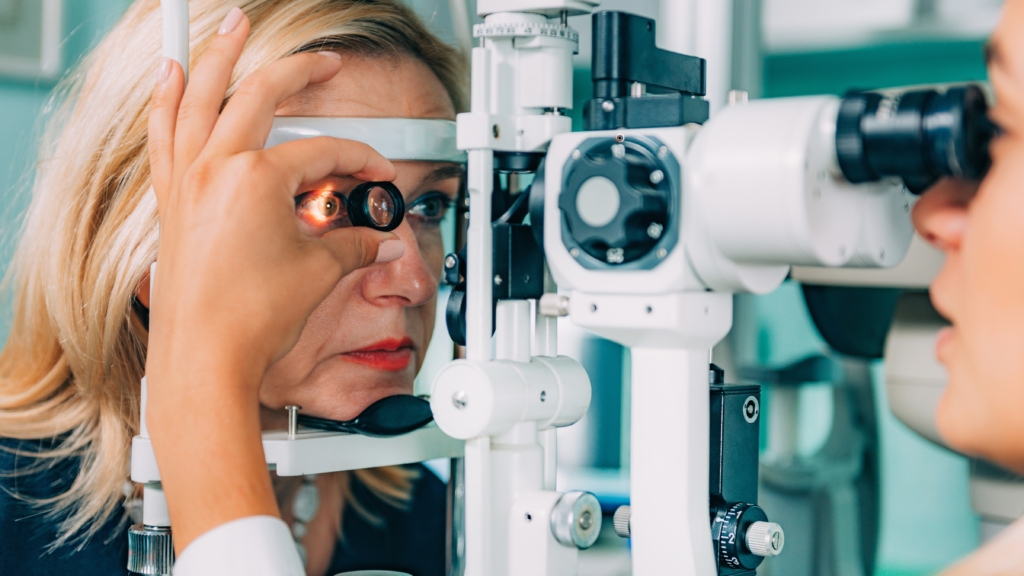
Why might I need LASIK Again?
1. Your spectacle prescription may simply have changed
LASIK corrects the prescription you have at the time of surgery. It cannot guarantee that your eyes will maintain exactly the same prescription for the rest of your life. Some people develop a small amount of short-sightedness, long-sightedness or astigmatism years later. For example, someone who had LASIK for short-sightedness at age 30 might have enjoyed excellent unaided distance vision for the next 15 or 20 years before gradually developing a small prescription again.
If the corneas and the rest of the eyes are healthy, this type of change can sometimes be treated with further laser surgery. This is usually called a laser enhancement or retreatment. However, before recommending an enhancement, we need to know that the prescription is reasonably stable. A changing prescription can be a clue that something else is happening within the eye.
2. Presbyopia becomes increasingly important after about age 40
One of the most important changes has nothing to do with your previous LASIK. It is called presbyopia. When we are young, the natural lens inside the eye is flexible and can change shape to focus on objects at different distances. As we get older, the lens gradually becomes less flexible. Eventually, focusing on close objects becomes more difficult. This typically becomes noticeable during our 40s and progresses over subsequent years.
You might notice that:
- restaurant menus need to be held further away
- small print is more difficult in dim lighting
- you need reading glasses
- your phone needs to be held further away
- changing focus from distance to near takes longer.
LASIK performed when you were younger cannot prevent presbyopia because LASIK reshapes the cornea, whereas presbyopia primarily results from ageing of the natural lens inside the eye. This distinction is particularly important when considering repeat laser treatment.
“My distance vision has become slightly short-sighted again – why not just correct it?” Sometimes that is exactly what we can do. But there can be a trade-off. A small amount of short-sightedness can actually help an older person read without glasses. Correcting that eye perfectly for distance may improve road signs but make reading without glasses more difficult.
For some people, one option is monovision, where one eye is predominantly corrected for distance and the other retains some short-sightedness to assist with intermediate or near vision. Monovision can work extremely well for appropriately selected patients, but it isn’t suitable for everyone. It can affect depth perception and the quality of vision in some circumstances, particularly in low light. A contact-lens trial may therefore be recommended before making a permanent surgical change.
3. The natural lens may be changing
This becomes increasingly important for people who had LASIK many years ago. Behind the pupil is the eye’s natural lens. Throughout adult life this lens gradually changes. Early lens changes can alter your spectacle prescription before you are aware that you have a cataract. For example, the lens can gradually become denser and sometimes make an eye increasingly short-sighted.
A patient might reasonably think: “My LASIK has regressed. I was seeing perfectly and now I’m short-sighted again.” But the LASIK correction may still be quite stable. The change may actually be occurring in the natural lens. This matters because performing additional laser treatment on the cornea may not be the best long-term solution if the natural lens is continuing to change.
4. Could it be cataract?
Possibly. A cataract is simply a loss of clarity in the natural lens of the eye. Cataracts are strongly associated with ageing and become increasingly common as we get older. Early cataract doesn’t necessarily produce dramatic cloudy vision.
You might initially notice:
- blurred or fluctuating vision
- increasing short-sightedness
- glare from headlights
- halos around lights
- poorer night vision
- colours appearing less vivid
- needing frequent changes to your glasses.
If cataract is responsible for your changing vision, additional corneal laser surgery may not be the appropriate treatment. Instead, cataract surgery may eventually address both the cataract and much of the spectacle prescription. This is one reason a full eye examination is much more important than simply measuring your current glasses prescription. A visually significant cataract is a reason not to proceed with LASIK; a lens-based approach is generally more appropriate.
5. Is there enough corneal tissue for another laser treatment?
If further laser surgery is being considered, we need to look carefully at your cornea. Your original LASIK procedure removed a precisely calculated amount of corneal tissue to correct your prescription. A second laser treatment would remove additional tissue. We therefore need to establish whether there is sufficient healthy corneal tissue remaining to perform another treatment safely.
Modern assessment may include:
- measurement of corneal thickness
- corneal topography
- corneal tomography
- assessment of the anterior and posterior corneal surfaces
- assessment of the previous LASIK treatment
- and, in some cases, epithelial thickness mapping or additional specialised imaging.
The aim is not simply to determine whether another treatment can technically be performed, but whether it can be performed with an acceptable margin of safety. Thin or abnormally shaped corneas may make further corneal laser surgery inadvisable.
6. What about the original LASIK flap?
LASIK involves creating a very thin flap in the cornea, performing the laser treatment beneath it, and then replacing the flap. That flap remains part of the cornea permanently. If further treatment is required many years later, there are different surgical approaches.
In selected cases, it is technically possible to carefully lift the original LASIK flap and perform additional laser treatment underneath it – even many years after the original procedure. However, lifting an old flap carries an increased risk of a complication called epithelial ingrowth, in which cells from the surface of the cornea grow underneath the flap.
Published studies have demonstrated that late flap lifting can produce good visual results, but epithelial ingrowth becomes an important consideration. In one study of enhancements performed at least five years after LASIK – with an average interval of more than 12 years – mild epithelial ingrowth occurred relatively frequently, although only a small proportion required further surgical treatment. For this reason, some refractive surgeons prefer not to lift an old LASIK flap when treatment is being performed many years later.
7. PRK may be an alternative to repeating LASIK
Instead of lifting the original flap, another possibility is to perform laser treatment on the surface of the cornea. This is generally known as PRK (photorefractive keratectomy). The same excimer laser technology used to reshape the cornea can be used, but the treatment is performed without lifting the original LASIK flap. PRK therefore avoids some of the complications associated with disturbing an old flap.
However, PRK has its own advantages and disadvantages. Compared with LASIK, recovery is usually slower, the eye can be uncomfortable during the early healing period, and vision may take longer to stabilise. Recent expert discussion of very late post-LASIK enhancements has increasingly emphasised PRK as an option, particularly because lifting an old LASIK flap carries a greater risk of epithelial ingrowth. There isn’t one retreatment method that is best for everybody.
8. The corneal epithelium can change after LASIK
There is another interesting reason why planning laser enhancement many years after LASIK can be more complicated than performing the original procedure. The epithelium is the microscopic layer of cells covering the front surface of the cornea. Following LASIK, this layer can gradually remodel itself. It may become slightly thicker in some areas and thinner in others, partly compensating for the shape produced by the original laser treatment.
Modern imaging can measure epithelial thickness across the cornea. In selected patients, epithelial thickness mapping can help the surgeon understand whether epithelial remodelling is contributing to the new prescription and can assist in planning a possible enhancement.
9. Dry eye can also make vision seem worse
Not every deterioration in vision means your prescription has changed. The tear film forms the eye’s first optical surface. If it becomes unstable, vision can fluctuate.
Dry eye becomes more common with age and may be associated with:
- prolonged computer use
- medications
- eyelid inflammation
- meibomian gland dysfunction
- environmental conditions
- hormonal changes.
A clue is that the vision may improve temporarily after blinking or after using lubricating eye drops. Dry eye and other ocular-surface problems should therefore be identified and treated before making final measurements for additional laser surgery. Ocular-surface disease can reduce both the accuracy of preoperative measurements and the quality of the eventual visual result.
10. Occasionally we need to exclude a corneal problem
Most people who had successful LASIK many years ago and subsequently develop mild blurred vision do not have a serious corneal problem.
Nevertheless, modern corneal imaging allows us to check carefully that the cornea remains stable.
One condition we specifically look for is corneal ectasia, where the cornea progressively changes shape and becomes weaker and more irregular.
This is uncommon, but it is important to identify because simply performing more laser treatment would generally not be appropriate.
Corneal topography and tomography are therefore important parts of assessing someone for further refractive surgery.
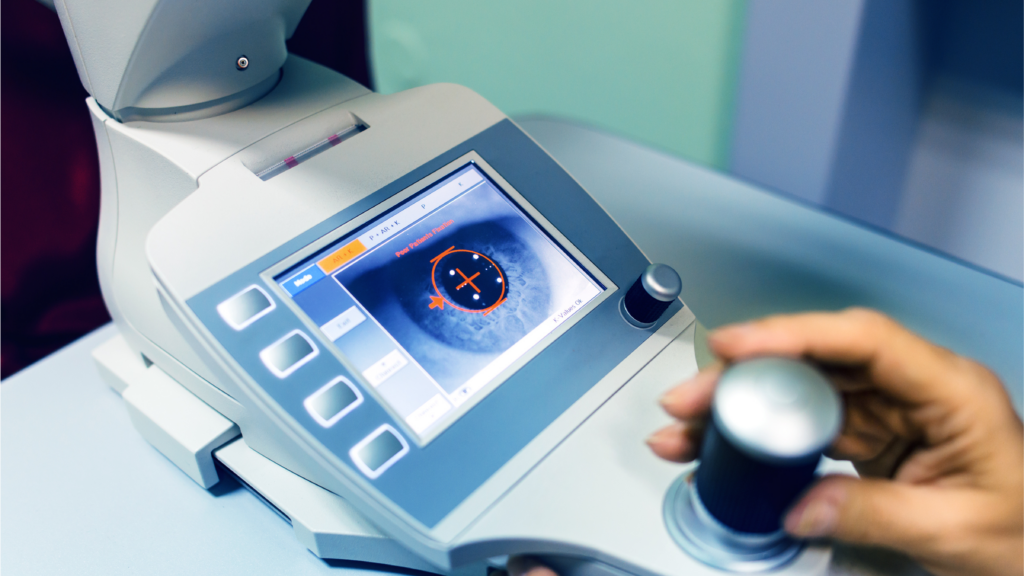
What will happen at my assessment?
If you are considering further laser treatment after previous LASIK, your assessment will usually be more detailed than simply having another eye test. We want to answer several questions: What is your prescription now? And, just as importantly, why has it changed?
Your assessment may include:
- unaided and corrected distance vision
- near vision
- a detailed refraction
- examination of the previous LASIK flap
- corneal thickness measurement
- corneal topography and tomography
- assessment of the tear film and ocular surface
- examination of the natural lens for early cataract
- measurement of eye pressure
- and examination of the retina and optic nerve.
Depending upon the circumstances, additional corneal or epithelial imaging may also be useful. A comprehensive medical eye evaluation, rather than simply a laser eligibility check, is particularly important before repeat refractive surgery.

If I can’t have laser surgery again, does that mean nothing can be done?
Definitely not. The important question isn’t: “Can we laser my eyes again?” A better question is: “What is the best way to give me the vision I want at this stage of my life?”
Depending on your age, eye health, prescription and visual priorities, the possibilities might include:
- no treatment if the change is very small
- occasional glasses
- contact lenses
- treatment of dry eye or another ocular-surface condition
- laser enhancement with PRK
- in selected circumstances, lifting the previous LASIK flap
- a monovision strategy
- or, if the natural lens has become the limiting factor, cataract or other lens-based surgery.
Sometimes the best recommendation is to do nothing surgically for the moment. For example, if someone in their 60s has a relatively small prescription but is beginning to develop cataract, correcting the cornea again may provide only a temporary benefit before cataract surgery becomes necessary.
Your old LASIK records can be useful
If you still have records from your original LASIK surgery, bring them with you. Don’t worry if you don’t – many people who had surgery 15 or 20 years ago understandably no longer have them. But, if available, information such as your original prescription, corneal measurements and details of the laser treatment can sometimes be helpful when planning further refractive treatment and can also be valuable when calculating the lens implant required during future cataract surgery.
So – can I have LASIK again?
Possibly. Having LASIK 10 or 20 years ago does not automatically mean you cannot have further laser eye surgery. But neither does a new spectacle prescription automatically mean that another laser treatment is the right answer. If your vision has changed many years after successful LASIK, we first need to determine whether the change is coming from: the cornea, the tear film, the spectacle prescription, presbyopia, the natural lens, cataract, or another part of the eye. Only then can we decide whether further laser treatment is appropriate.
For some people, a relatively straightforward laser enhancement can restore excellent unaided vision. For others, PRK may be preferable to lifting the old LASIK flap. Some people will benefit more from a lens-based procedure, while others may be better advised to wait.
The bottom line
If your LASIK was successful for many years but your vision has recently changed, don’t assume that your LASIK has simply “worn off.” Your eyes have continued to change as you have aged, even though the corneal reshaping produced by your original surgery remains.
A comprehensive examination can usually establish the reason for the change and allow your ophthalmologist or refractive surgeon to discuss the options with you. And after 10 or 20 years of good vision following your original LASIK, the aim isn’t necessarily to repeat what was done the first time. It is to choose the treatment – if any – that is most appropriate for your eyes now.
To find out more about laser eye surgery at the Wellington Eye Centre and whether you’re suitable, get in touch. Or call us on 0800 733 327.
This article provides general information and is not a substitute for an individual eye examination or medical advice. Suitability for repeat laser eye surgery can only be determined after a comprehensive assessment by an appropriately qualified eye-care professional.

Oct. 07, 2026 | Uncategorized
I Had LASIK 10–20 Years Ago and My Vision Has Changed. Can I Have Laser Eye Surgery Again?

Aug. 19, 2026 | Staff Picks
Things to Do in Wellington: Our Staff Picks Near Cuba Street

Aug. 19, 2026 | Staff Picks
Where to Eat in Wellington: Our Staff Picks Near Cuba Street
Jul. 17, 2026 | Eye Health
What is Blepharitis?
Jun. 16, 2026 | Laser Eye Surgery